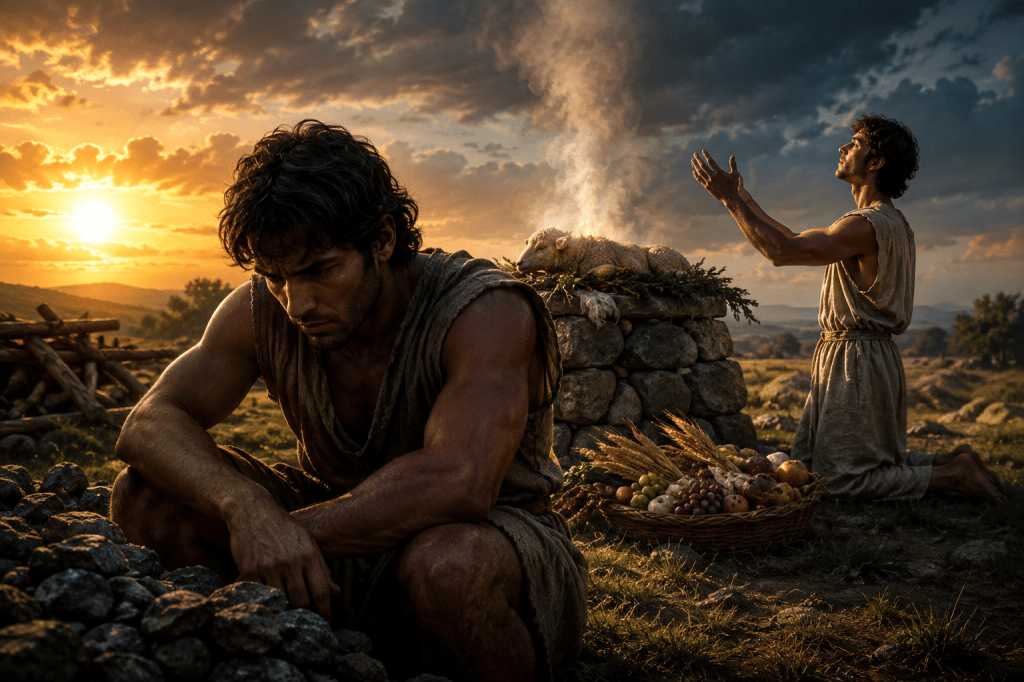
The Question That Made Me Almost Argue with God
Some questions don’t come from rebellion. They come from reading the Bible carefully.
For years, I approached Scripture the way many Christians do. I saw the stories as beautiful but mostly independent accounts of God’s dealings with different people at different times. Cain and Abel belonged to one story. Jacob and Esau belonged to another. Joseph had his own narrative. The Prodigal Son was simply a lesson about repentance and forgiveness. Each account seemed to stand on its own with its own spiritual lesson.
Or so I thought.
Then one day, while reading through Genesis again, I noticed something I couldn’t ignore. It wasn’t a verse or a doctrine, and it wasn’t something I had heard preached. It was a pattern. Once I saw it, it seemed to appear everywhere in Scripture, and honestly, it unsettled me.
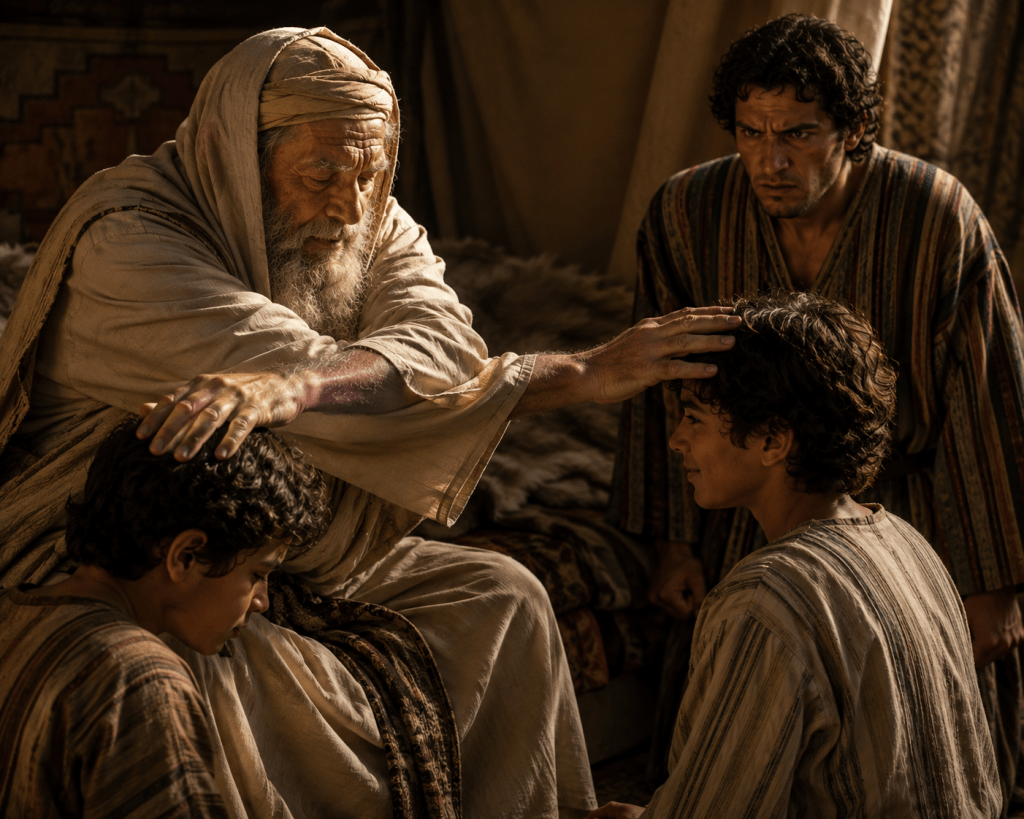
Genesis 48:14 (Good News Translation)
14 But Jacob crossed his hands, and put his right hand on the head of Ephraim, even though he was the younger, and his left hand on the head of Manasseh, who was the older.
I remember sitting with my Bible open, reading through the familiar stories, when I found myself asking God a question that grew more pressing with every chapter:
“But why?”
Why do You keep doing this?
You already know what is going to happen. You know Cain will become jealous. You know Esau will spend years grieving the blessing he lost. You know Joseph’s brothers will hate him enough to sell him into slavery. You know wounded pride has destroyed countless relationships and even nations. So why does this pattern keep repeating? Why does it almost always seem to be the younger brother?
At first, I assumed I was reading too much into the text. But the more I read, the harder it became to dismiss. Isaac instead of Ishmael. Jacob instead of Esau. Joseph above his older brothers. Ephraim over Manasseh. David chosen over seven older brothers. Moses leading while Aaron, his older brother, follows. Even in the New Testament, Jesus tells one of His best-known parables about an older brother and a younger brother.
Surely this wasn’t coincidence.
The Bible seemed to be telling the same story again and again. But why?
More Than a Curious Pattern
As I continued reading, another question surfaced, one that I suspect many Christians have quietly wondered but rarely say aloud.
Does God understand how deeply rejection hurts?
Because it does.
Being overlooked hurts. Being passed over hurts. Watching someone else receive the opportunity you hoped for hurts. Seeing another person celebrated while you remain unnoticed hurts. The Bible never pretends those emotions aren’t real.
Esau weeps bitterly. Cain burns with anger. Joseph’s brothers are consumed by resentment. The elder brother in Jesus’ parable refuses to enter his own father’s celebration because he simply cannot understand what seems so unfair.
These aren’t cardboard villains. They are painfully human. If we’re honest, most of us have found ourselves in their shoes at one point or another.
Perhaps you’ve watched someone else receive the promotion you worked for. Perhaps you’ve seen another person’s ministry flourish while yours remained hidden. Perhaps you’ve watched a sibling receive the attention you longed for. Or perhaps you’ve quietly wondered why God seems to bless everyone except you.
If so, these stories aren’t just ancient history.
They’re mirrors.
The Question Beneath the Stories
For a long time, I assumed these stories were about favoritism; that God simply loved one person more than another. But that explanation never satisfied me.
The same God who chose Isaac also protected Ishmael. The same God who chose Jacob later prospered Esau. The same God who placed Ephraim before Manasseh blessed both brothers. And the father in Jesus’ parable never stopped loving the older son.
Again and again, I noticed something that changed the way I read these passages:
God chooses differently without loving differently.
That distinction changed everything.
Perhaps election is not the same as affection. Perhaps being chosen for a particular purpose is not the same as being loved more. Perhaps we’ve been asking the wrong question all along.
A Pattern That Begins in Eden
The deeper I studied Scripture, the more I realized that sibling rivalry is not merely a recurring theme. It is one of the Bible’s primary ways of explaining the human condition.
The first family ends with murder. The first brothers become enemies. The first recorded question concerning a brother is, “Am I my brother’s keeper?” That question echoes throughout the rest of the Bible.
Cain asks it with violence. Esau asks it with grief. Joseph’s brothers ask it with betrayal. Saul asks it through envy toward David. The Pharisees ask it through their rejection of Jesus. The elder brother asks it by refusing to join the celebration.
Different names. Different centuries. The same wounded heart.
Sin has an extraordinary ability to transform brothers into rivals.
God’s Strange Habit
One observation kept returning as I read.
God has a strange habit of overturning the assumptions people naturally build their lives upon.
The world says the firstborn should inherit. God says, “Not always.”
The world says strength determines greatness. God chooses shepherd boys.
The world admires impressive appearances. God looks at the heart.
The world builds ladders of status. God consistently reaches for those standing lower on them.
At first glance, it almost seems as though God enjoys surprising people. But His choices are never random. Every unexpected decision reveals something about His kingdom and challenges the values we instinctively embrace.
The question is not whether God is being unpredictable.
The question is what He is trying to dismantle within us.
Not Just Ancient History
This isn’t ultimately a discussion about older brothers and younger brothers.
It’s about us.
The human heart hasn’t changed. We still compare ourselves with others. We still measure our worth against another person’s success. We still assume that someone else’s blessing somehow diminishes our own. We still confuse God’s different callings with unequal love.
Because of that, we continue asking the same question Cain silently asked outside the field:
“Why him?”
That single question has divided families, churches, friendships, businesses, ministries, and even nations.
Perhaps comparison is one of Satan’s oldest and most effective weapons. It whispers that God’s love is limited. It convinces us that if someone else receives grace, there must be less grace left for us. It quietly transforms brothers into competitors.
Before We Continue
As we walk through these reflections together, I want to invite you to resist the temptation to rush toward easy answers. Some of these stories are uncomfortable. Some of God’s decisions are difficult to understand. Some questions remain mysterious.
Yet Scripture teaches us something remarkable: God is never afraid of honest questions asked by hearts that genuinely want to know Him.
I began this journey believing I was investigating God’s apparent unfairness. I finished it realizing that the issue was never God’s choices. The issue was what those choices revealed about the human heart, including my own.
By the time we reach the cross, I believe we’ll discover that God wasn’t repeating the same story because He had run out of ideas. He was telling one story from the very beginning, a story about grace, identity, brothers, and ultimately about Jesus Christ, the only Firstborn who deserved everything yet willingly shared His inheritance with those who deserved nothing.
That is where our journey begins.
Sharon Paulina Boye
August 1, 2026

Leave a Reply