Dear Royalty,
Have you ever noticed how the worst kind of waiting doesn’t just feel boring, it actually feels heavy?
Like there is a physical weight pressing down on your chest while you wait for the medical results, or the bank account to clear, or for that person to finally change. It’s a tight, exhausting strain.
There is a raw Hebrew word for hope that captures this exact feeling perfectly: Tiqvah.
In our modern language, hope feels kind of flimsy. It’s like a wish. We say, “I hope things get better.” It has no backbone. But as we looked at previously, the literal, gritty definition of tiqvah isn’t a wish at all; it is a thick, braided rope. And the root word it comes from literally means “to wait under tension.”
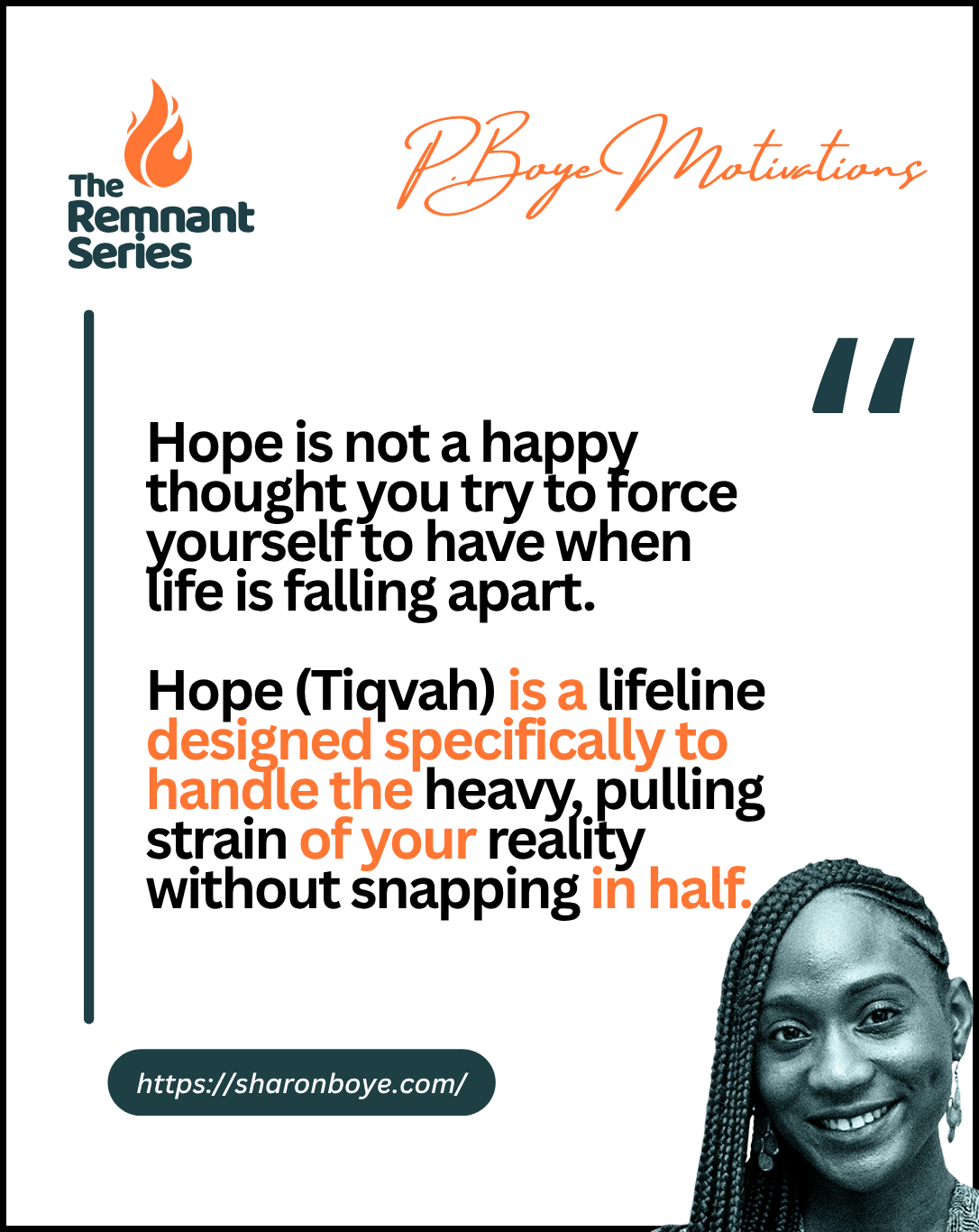
When you look at hope through that lens, everything changes. Hope isn’t a happy thought you try to force yourself to have when life is falling apart. Hope is a lifeline. It’s a cord designed specifically to handle the heavy, pulling strain of your reality without snapping in half.
And nobody understood the weight of that tension better than a nameless, exhausted woman crawling through the dirt in the Gospel of Matthew.
Total Isolation
For twelve years, this woman’s life was defined by tension. Because of a chronic bleeding condition, the laws of her day labeled her “unclean.” It sounds like a cold, religious term, but the reality was devastating: it meant she couldn’t hug her family. She couldn’t hold anyone’s hand. Every single human relationship she had was abruptly severed.
She spent every last penny she had on doctors who promised they could fix her, but they only made her worse. She was broke, completely isolated, and physically drained.
Every fragile thread she had ever leaned on had snapped. She was at the absolute end of her rope.
Then, Jesus walked into her town, surrounded by a massive, chaotic crowd.
Reaching for the Thread
This woman didn’t politely stand in line to ask for a miracle. She couldn’t risk being recognized, or people would have screamed at her to get away.
So, she got down in the dust. She literally crawled through a maze of moving ankles and trampling feet just to get close to Him.
The Bible says she reached out to touch the “hem of His garment.” But she wasn’t just grabbing at random fabric. She was targeting the tzitzit; the tightly braided, knotted tassels hanging from the corners of His (Jesus) cloak.
When her desperate, dirty hand reached out for those twisted threads, she was executing the exact definition of tiqvah. She didn’t have a polite, passive wish. She was a dying woman gripping a lifeline.
The Line That Holds
She held onto the edge of the rope because she had nothing else left to hold. And the second her fingers closed around that thread, the pulling stopped. The tension broke. The bleeding dried up, and her life changed forever.
As we noted in the last post, Proverbs promises that when your expectations are anchored in the right place, your line will never be cut off.
Life has a brutal way of throwing things at us that easily slice through our emotional comfort. If our expectations are tied to fragile things, we’re going to get hurt when they snap.
But this woman in the crowd teaches us how to survive when everything breaks. When you’re at your limit, you don’t need a perfect plan. Sometimes, you just have to drop to your knees, block out the noise of the crowd, and reach through the dirt for the only Lifeline built to handle the tension of your pain.
Wait and Reach for Him under the tension. He’s not going to let your line snap.
Hang on,
Sharon Paulina Boye
September 17, 2026

Leave a Reply