Dear Royalty,
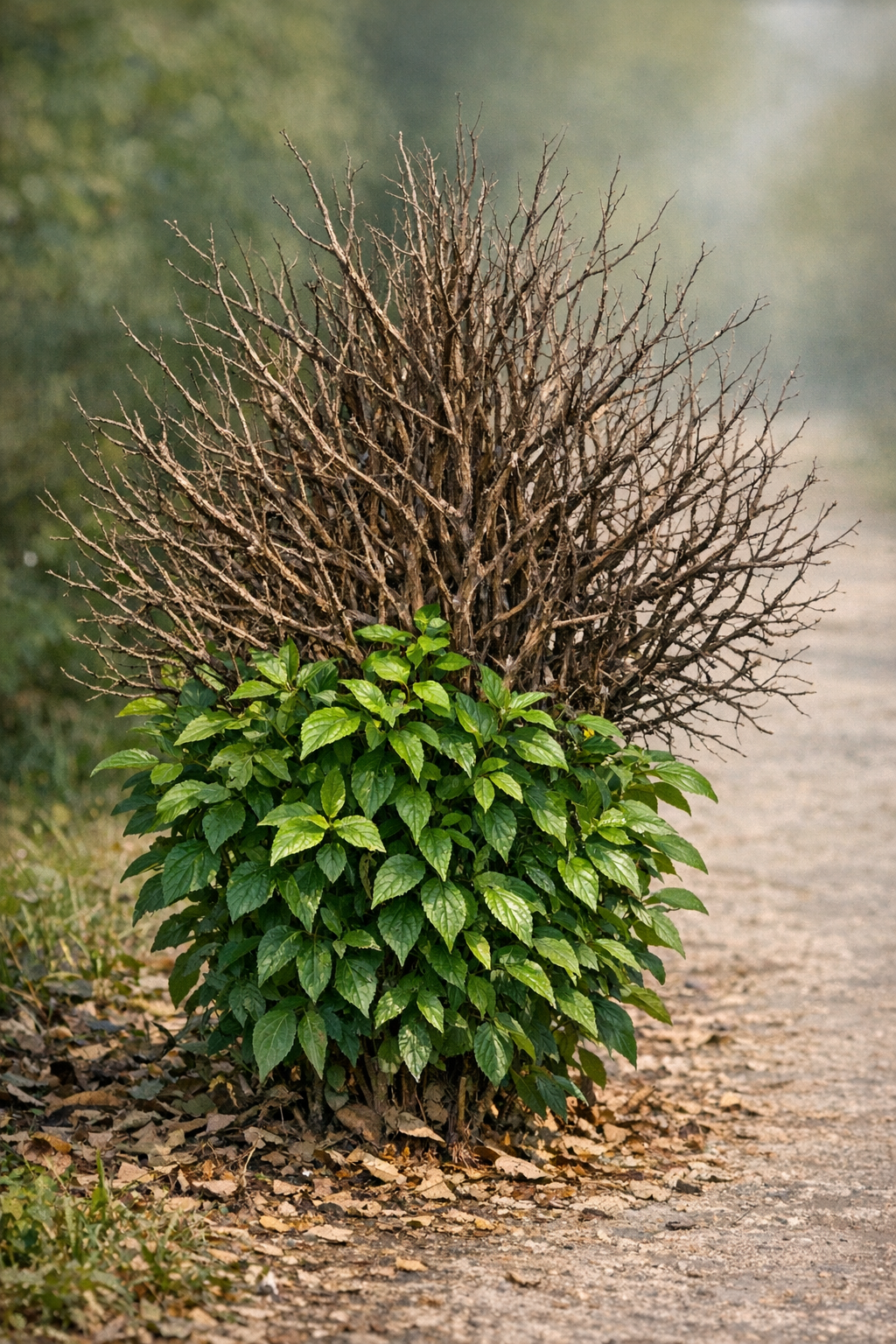
I saw a plant on my way to work.
Its bottom was full of leaves; green, alive, quietly thriving.
But the top was bare. Dry. Dead.
I had never seen anything like it in all my life, and I was genuinely perplexed.
I slowed down and stared at it longer than I meant to.
Something about it unsettled me.
I found myself asking questions that felt bigger than the plant itself.
Is it possible to begin well and end rough?
Is it possible for life to grow in one place while another part withers?
What does it mean when what’s visible looks dead, but something underneath is still alive?
That image stayed with me long after I drove away.
The Expectation We Carry About Growth
We are taught, quietly and consistently, that growth should be obvious.
That life should move upward.
That progress should be visible.
That if something is healthy, it should look healthy from the top down.
So when the “top” of our lives looks bare — when plans stall, timelines stretch, or dreams feel delayed — we assume something has gone wrong.
But the plant challenged that assumption.
Nature, it turns out, does not grow for appearances.
It grows for survival.
When the Top Looks Dead
In life, the “top” is what people see:
- achievements
- careers
- relationships
- milestones
- visible success
A bare top can feel like:
- unanswered prayers
- delayed goals
- seasons of waiting
- stalled momentum
- quietness where noise was expected
This is usually where discouragement sets in. Where comparison grows loud. Where we start questioning our decisions, our worth, and our timing.
But the plant was not dying.
It was adapting.
When Growth Moves Underground
The bottom of the plant was alive because that was where growth was most sustainable.
In life, bottom growth looks like:
- emotional maturity
- healing old patterns
- learning boundaries
- gaining clarity
- becoming more honest with ourselves
- building patience we never asked for
This kind of growth is invisible. It doesn’t announce itself. It doesn’t earn applause.
But it determines whether what comes next will last.
Sometimes life strengthens what cannot be seen before restoring what can.
Why Re-Analyzing Is Part of Growth
For some people, seasons like this are an invitation to re-analyze.
Not because they failed.
Not because they chose wrong.
Not because they wasted time.
But because growth requires honesty.
Re-analysis asks deeper questions:
- What assumptions was I building on?
- What patterns keep repeating?
- What have I been maintaining out of habit rather than conviction?
- What do I actually want, not just what I was told to want?
These questions feel uncomfortable because they strip away appearances.
But they prevent collapse later.
Re-analysis is not going backward.
It is refinement.
The Risk of Rushing the Process
When people refuse to slow down and re-examine, they often:
- repeat the same cycles with different people
- chase speed instead of stability
- confuse busyness with progress
- rebuild the same structure that already failed
Life does not slow us down to punish us.
It slows us down to protect us.
A plant that grows too fast without roots snaps under pressure.
A life that grows too fast without foundations does the same.
When Growth Rises Again
Eventually, growth does move upward again.
But when it does, it feels different:
- progress is steadier
- success feels calmer
- relationships are healthier
- decisions are less desperate
- pressure is easier to carry
Nothing was wasted.
Everything was prepared.
A Final Thought
That plant taught me something simple but profound:
If something is still growing at the bottom, it is not the end.
Sometimes life allows the top to fall apart so the foundation can finally become strong enough to hold what’s coming next.
Sharon Paulina Boye
March 20,2026



Leave a Reply