Dear Royalty,
I will not pretend to have all the answers, and I am certainly not writing from a place of perfection. These words are not rigid instructions meant to guarantee a flawless home. None of us is handed an easy formula, and there is no universal blueprint that fits every marriage or family.
But have we ever truly stopped to ask the question?
Not who failed.
Not what went wrong.
But how is it even possible to build a home that lasts?
If there is any conviction I hold as I write, it is this: Scripture consistently reminds us that a home not built by and on God cannot sustain itself. “Unless the Lord builds the house, the builders labor in vain” (Psalm 127:1). Jesus echoes this truth when He speaks of a house built on sand—impressive in appearance, but unable to stand when the storms come (Matthew 7:24–27). Without God as the builder and foundation, a home may stand for a season, but it will not last when tested.
If broken homes leave scars that echo through generations, then the better question is not who failed, but how we build homes that last. This is the question we should be asking, not from a distance, but from within our own walls.
Before we talk about building, we must first ask what we are currently allowing. What are we tolerating because it feels easier than addressing it? What conversations are we avoiding because they are uncomfortable? What habits, spoken or unspoken, are quietly eroding the foundation of our homes right now?
Strong homes are not accidental. They are built deliberately, brick by brick, choice by choice, often in quiet, unseen ways. And they are built at a cost.
Building a home that lasts will cost your pride.
It will cost your comfort.
It will cost your need to be right.
It will cost consistency when no one applauds.
If I may say so, people bleed for strong homes rather than just drifting into them. They choose repair over retreat. They stay up late having the hard conversation instead of going to bed angry. They offer apologies no one else hears. They keep showing up when walking away would be easier. Much of the work that saves a home happens privately, long before anything ever looks better publicly.
Strong homes are not defined by the absence of conflict, but by how conflict is handled. Every lasting home has weathered storms. What matters is whether the foundation was strong enough to hold.
A home that lasts begins with humility.
Humility says, “I can be wrong.”
Humility listens before defending.
Humility creates space for growth, repentance, and healing.
Without humility, pride becomes the cracks that slowly weaken the structure. Pride keeps score. Pride justifies distance. Pride chooses silence over repair. Over time, what is not addressed becomes what destroys.
A lasting home also requires commitment beyond feelings.
Love is more than emotion. It is decision, discipline, and daily sacrifice. Feelings shift. Seasons change. Commitment anchors a home when emotions are unstable. A house built on feelings alone will collapse when feelings fade. Commitment stays when excitement is gone and chooses faithfulness when convenience tempts us elsewhere.
Communication is another cornerstone.
Not the loud kind, but the honest kind. The kind that chooses truth over silence and understanding over winning. Many homes break not because people stop loving, but because they stop listening. Unspoken resentment, unmet expectations, and unresolved wounds quietly do their damage. Words left unspoken can erode a foundation just as surely as careless words spoken in anger.
A home that lasts is protected intentionally.
What we allow in matters. What we entertain matters. Voices, habits, influences, and unresolved wounds all shape the atmosphere of a home. Protection is not control; it is stewardship. It is recognizing that peace must be guarded and that neglect quietly invites decay. A home left unguarded does not remain neutral; it slowly deteriorates.
Grace must also live in the home.
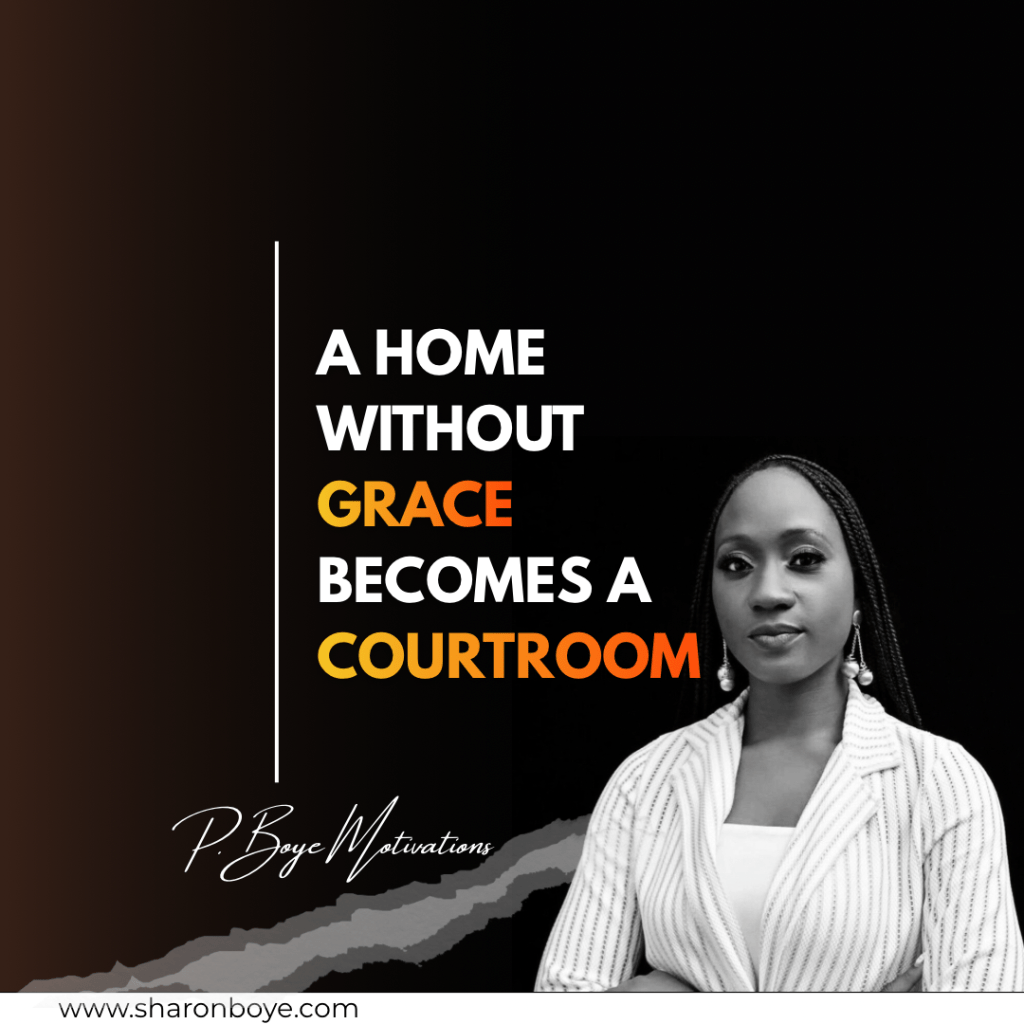
No one enters marriage or family life fully formed. We all bring flaws, baggage, and blind spots. Grace does not excuse harm, but it creates room for growth. It allows accountability without condemnation and correction without cruelty. A home without grace becomes a courtroom. A home with grace becomes a place of refuge.
Finally, a lasting home is built with purpose.
Homes are not only for comfort—they are for formation. They shape how children see love, how spouses grow, and how individuals understand belonging. Building a home is not merely relational work; it is spiritual work. It is stewardship. It is spiritual warfare. Faith is practiced daily inside these walls, not just publicly on display.
When a home understands its purpose, it becomes something worth fighting for.
So how does one build a home that lasts?
By choosing humility over ego.
Commitment over convenience.
Communication over silence.
Protection over negligence.
Grace over resentment.
Purpose over pride.
These choices are not made once. They are made daily. And they will cost something. But the cost of building will always be less than the cost of neglect.
This year, let us stop treating strong homes as rare miracles and start building them intentionally. Let us ask better questions, take deeper responsibility, and invest in what shapes us most.
Strong homes are built.
But neglected homes collapse quietly.
And they are worth the work.
Sharon Paulina Boye
A child whose grateful for the Christ Home
February 13 , 2026


Leave a Reply