
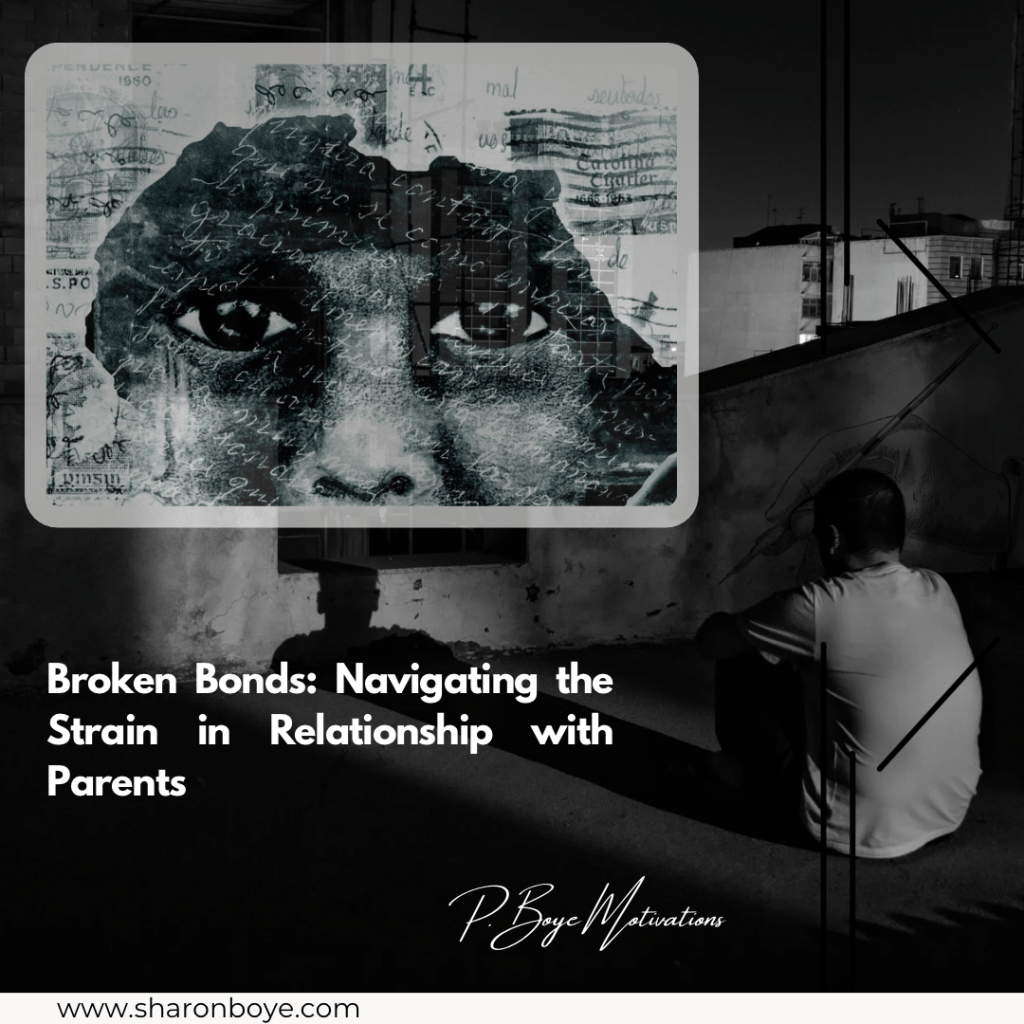
I wake up in the same house I’ve lived in for years. The walls are familiar, the rooms unchanged, yet the air is thick with tension. The family photos on the walls seem to mock the current state of affairs, reminding me of happier times. My parents, once my safe haven, now feel like strangers. The sight of them almost irritates me. How did it come to this?
Happy New Month Royalty!
Over the next few days, we will be delving into a critical aspect of every person’s life: FAMILY. It’s time to address the fractures that have weakened the bonds between fathers and sons, mothers and daughters, siblings, and in-laws. The family system needs restoration, I strongly believe our Heavenly Father (God) has a heart for Families, even in this season.
One of the most painful experiences is being hurt by someone who knows you intimately. Today, let’s focus on the parent-child relationship.
When Dad Is Never Home
Maybe your dad was seldom home—a “typical” father, some might say. But is it truly typical, or have we just accepted the idea of absent parents?
Maybe you were once a child eagerly waiting by the window, the day’s light fading into evening, hoping to see your father’s car pull into the driveway. The disappointment becomes a nightly ritual, the longing turning into resentment. As you grew older, the empty chair at the dinner table became a symbol of absence, the silence at family gatherings a constant reminder of what’s missing.
When Mom Walks Away
Or perhaps you’re a young woman whose mother walked away, leaving you to be raised by your father. Growing up without your mother’s love, not because she passed away, but because she chose to leave, feels like the ultimate act of selfishness. Imagine the emptiness of never having a mother’s comforting embrace, the confusion of wondering why you weren’t enough for her to stay. Each Mother’s Day, instead of celebrating, you find yourself avoiding social media, unable to handle the flood of tributes to maternal love that you never experienced.
Living in an Abusive Home
Maybe you grew up in an abusive home, witnessing your parents’ constant battles. The shouting matches, the broken dishes, the fear that gripped you every time you heard their raised voices. You learned to tiptoe around the house, trying to avoid triggering another explosion. The nights you spent hiding under your bed, heart pounding, wishing you could disappear, left you with an enduring sense of anxiety and mistrust.
When Parents Don’t Listen
Or your parents didn’t truly listen to you. They heard your words but never paid attention to your needs and dreams. You sat at the dinner table, trying to express your feelings, only to be “told” what you should feel, think, and do. They dictated your life, deciding what you should study, disregarding your aspirations. The frustration of feeling invisible, unheard, and controlled leaves a lasting impact. Imagine pouring your heart out about wanting to pursue art, only to have your dreams dismissed in favor of a “more practical” career in engineering.
The Consequences of Unresolved Conflict
These experiences leave deep scars. Some children, pushed to their limits, have even harmed their parents or guardians, believing it’s the only escape from constant criticism and being labeled the “black sheep.” Imagine the desperation that leads to such tragic outcomes, the loss of hope that drives such extreme actions. The nightly arguments, the feeling of being a perpetual disappointment, can push even the most resilient to the brink.
Breaking the Cycle
I’m not against making decisions that help you thrive, such as moving out with the right motive to pursue life on a positive path. But I am concerned about whether you’re about to repeat the same mistakes with your own children.
You might think, “I’ll never be like my parents. They were cruel and unkind.” But here’s a truth I’ve come to realize: hope alone is not a strategy. If you don’t consciously work on building patience and communication skills, you might end up mirroring the very behavior you despise.
I didn’t always think this way. I, Sharon, began to notice patterns in my own behavior that felt disturbingly familiar. I realized my impatience was a learned behavior from a teacher who was impatient with me. I didn’t like her actions, but I found myself acting just like her when others came to me for guidance.
Could this behavior you hate so much be lurking around somewhere within you?
The Path to Healing
The first step is to learn from your experiences, not run from them. Build through the pain. Understand what caused your parents to act the way they did. Don’t just unlearn the wrong actions; actively learn and practice the right ones. Imagine the relief of breaking free from those patterns, of seeing your own children smile genuinely because they feel understood and valued.
This wil take intentional discipline. You need to fight to indeed be a better parent to your own children. I’m sorry you went through what you did, I truly am. However, can we save your children from having to experience this same trauma because you chose to learn?
I wonder: Can broken bonds truly be mended, or are some fractures too deep to heal? Join me as I explore this question and strive to uncover whether there is hope for restoring what feels irreparably damaged. The answers might just surprise us—and could change the way we approach our own family relationships forever.
New blog post out on Saturday ❗
With love and hope,
Sharon Paulina Boye
August 1, 2024




Leave a Reply